In San Francisco, the Asking Price Has Become an Opening Bid
November 5, 2026
On October 2, a midcentury home at 20 Cherry Street, on a cul-de-sac against the Presidio Wall, came to market at $18.5 million. It closed twenty days later, on October 22, at $28.5 million. The San Francisco Chronicle reported that the $10 million gap set a city record for the most dollars a home has sold above its list price, a premium of roughly 54%. The house sits on about 0.31 acres, was designed by the San Francisco firm Whisler-Patri in 1966, and had stayed in one family for more than 40 years.
The $18.5 million figure worked as a starting point for bidding. In San Francisco this fall, a list price tells you how the seller has chosen to run the sale. The sale price is set by who shows up, how much cash they bring, and how few other homes they can choose from.
Cherry Street is the largest dollar figure. The pattern runs all through the city's prime neighborhoods.
| Address | Neighborhood | Asking | Sold | When |
|---|---|---|---|---|
| 20 Cherry St. | Presidio Heights | $18.5M | $28.5M | Closed Oct. 22, 2026 |
| 120 Cherry St. | Presidio Heights | $14M | $17.15M | Closed the week before 20 Cherry |
| 2 Sixth Ave. | Near Lake Street and the Presidio | $7.999M | $15M | Closed Oct. 7, 2026 |
| 135 San Benito Way | St. Francis Wood | $4.5M | $6.6M | Listed early Sept., closed 20 days later |
| 3140 Pacific Ave. | Pacific Heights, Presidio Wall | $7.495M | $12M | July 2026 |
| 2512 Union St. | Cow Hollow | $7.95M | $15M | May 2026 |
2 Sixth Ave. was listed September 17 and went pending September 28, eleven days later. SFGate reported the Cow Hollow sale at 88.7% over ask and called it the largest premium over asking for any home listed above $5 million. In St. Francis Wood, the Chronicle reported that 135 San Benito Way drew six offers, five of them all-cash.
These are not one-off results. Across the city, single-family homes sold for an average of 31% above their original asking price in September 2026. That was the highest monthly reading in a three-year local data series, up from 14% in September 2025. The Chronicle found that nearly 92% of September's single-family sales closed above asking.
Some of this is deliberate. Bay Area sellers have long priced to entice, setting an ask well below expected value to draw a crowd and start a bidding war. The Chronicle described the practice in October 2025, when the city's typical home value was still below its pre-pandemic level and the effect of AI wealth had not yet shown up in the data.
A low ask on its own only gets attention. What turns attention into a 31% average premium is how little there is to buy. At the end of September 2026, the city had 229 single-family homes for sale, compared with 306 a year earlier, a 25% drop. Inventory came to 1.2 months of supply, measured against a statewide benchmark of about three months for a balanced market. When a buyer in Presidio Heights loses a house, there may be no comparable one listed for months. Each bid reflects that.
The California Association of Realtors put San Francisco's September 2026 single-family median at $2.054 million, up 17.4% from a year earlier. That median is a blunt summary of a market where the starting number on any one house often has little to do with where it ends.
In a typical financed purchase, one person in the transaction answers to past sales: the appraiser. A lender lends against the appraised value, and that value comes from comparable closings. That link keeps sale prices loosely tied to history.
At the top of San Francisco's market, that link has mostly disappeared. Old Republic Title data for January 1 through September 1, 2026, reported by the Chronicle, shows how the share of homes closing without a loan rises with price:
The San Francisco Standard reported that cash accounted for three in four single-family sales above $6 million in the same period, and that buyers at the upper end often skip appraisal and insurance requirements. When almost four in five sales above $7 million close without a lender, no outside party checks the price against past closings. The price is whatever the second-highest bidder would not pay.
Not all of that money is liquid. The Standard reported that some AI-company employees hold pre-IPO shares they cannot sell yet. These buyers use so-called quiet loans against that stock so they can present offers as all-cash. The Chronicle described the backdrop as an infusion of AI money, along with expectations of more to come as companies such as OpenAI and Anthropic go public. It also quoted a local agent saying the buyer pool includes finance, venture capital and entrepreneurs, not only AI.
This also explains why rising rates have not cooled the top of the market. The same October Chronicle report found that higher-end buyers are unlikely to be put off by rates, since many can pay cash. For those households, a title-industry source said, the question is whether to borrow and how much. Many buy in cash and take out a loan on the home afterward.
The city's condo market shows the same effect. The median condo price in September 2026 was $1,316,500, up 18.87% year over year, which is slightly faster than single-family homes. Condos sold for an average of 10% over original asking that month, a record for the series, compared with 1% in September 2025. The Chronicle found that nearly three-quarters of condo sales in the first three weeks of October closed above asking.
The cash pattern goes further in condos. Old Republic's January-to-September data showed 43% of condos closing without a loan, against 33% of single-family homes. The Standard reported that condos at any price were more likely to sell for cash than houses. Supply has tightened along the same lines. Condo inventory was 2.0 months at the end of September, down from 3.5 months a year earlier and above four months as recently as last spring, which was buyer's-market territory.
A segment that a year ago gave buyers time to think now runs on the same terms as the house market, at a smaller scale.
The Chronicle's October reporting placed Marin among the commuter markets seeing price gains from the same money, though smaller than San Francisco's. The Standard's cash-bidding story opened with a Larkspur example. A buyer offered all-cash, $825,000 over a $3.1 million asking price, and still lost to another cash bidder among 14 offers.
For buyers comparing a San Francisco address with one in Marin, the asking prices on each side of the Golden Gate share a weakness. Both may be set to draw bids, so neither is a reliable guide to what a home will cost.
If the ask is a seller's tactic, the useful work for a buyer is to find the numbers that reflect actual value. In practice that means looking at:
This post is general market information, not legal, tax or financial advice, and decisions about financing or offer terms should be confirmed with the right professionals for your situation.
How far over asking are San Francisco homes selling right now? In September 2026, single-family homes averaged 31% above original asking and condos 10%. Both were records for that local data series. Individual prime sales this year went much higher. 2 Sixth Ave. closed 87.5% over its ask in October.
Did higher mortgage rates slow the top of the market? Not according to the Chronicle's October reporting. It found that many high-end buyers can pay cash, and that above $7 million, 79% of sales from January 1 through September 1, 2026 closed with no loan.
Are condos still the slower, calmer part of the market? Not this fall. Condo supply fell to 2.0 months at the end of September 2026, compared with 3.5 months a year earlier, and condos sold above asking at a record rate.
When a $18.5 million ask turns into a $28.5 million sale in twenty days, a buyer's offer and a seller's pricing strategy both need to rest on closed sales and a clear read of who else is bidding. The Sarkissian Bullock Team prepares that analysis for clients on both sides of the bridge, and we welcome the chance to do it for you. Request a Confidential Valuation.
Why People Are Making The Move In 2026
Why Smart Sellers List Now
A Parent’s Real Estate Guide
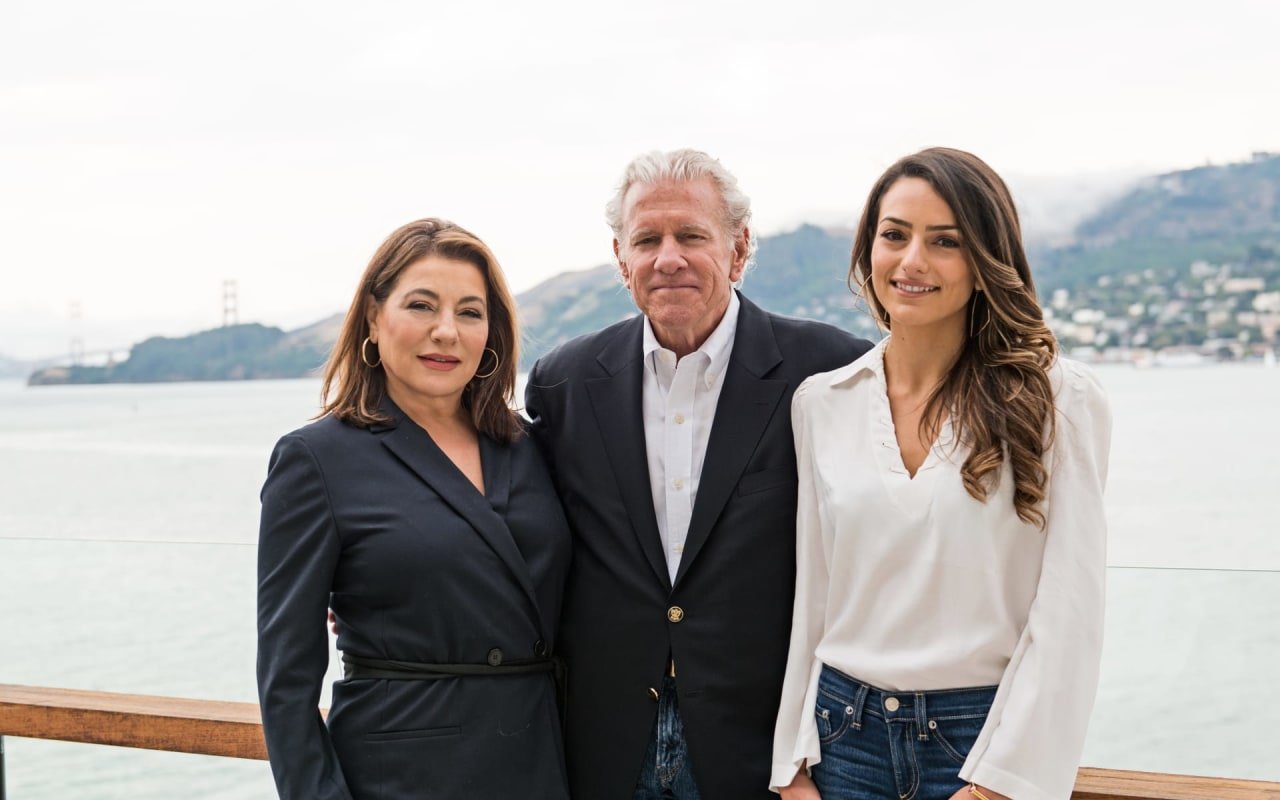
The Sarkissian Bullock Team is consistently regarded as the best and most trustworthy realty service found anywhere, offering their keen, personal advice to their clients.
Sarkissian Bullock Team
Lydia Sarkissian | CA DRE# 01159670
415.384.4000
Magda Sarkissian | CA DRE# 02028978
415.384.4000
Bill Bullock | CA DRE# 00837358
415.384.4000
100 Tiburon Blvd., Suite 100 Mill Valley, CA 94941